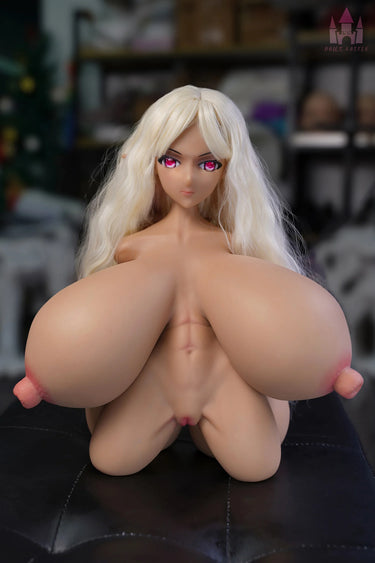
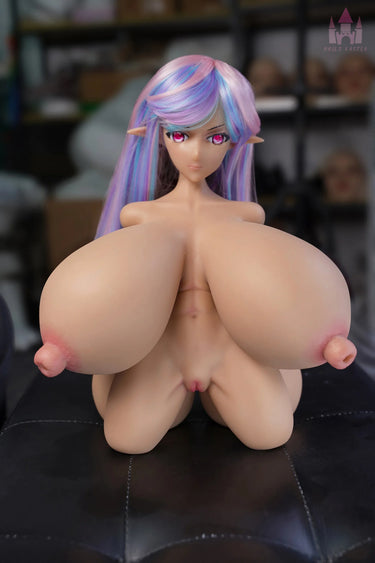
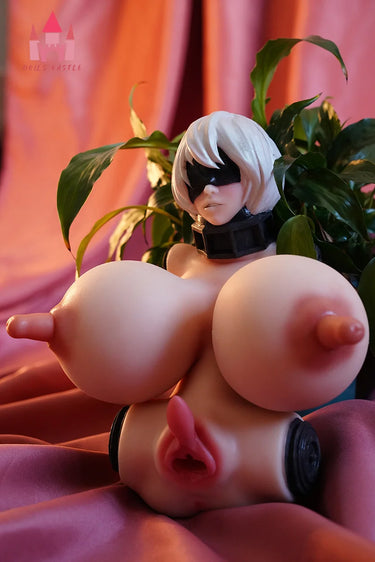
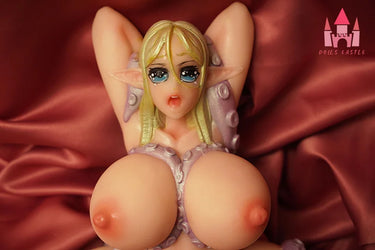
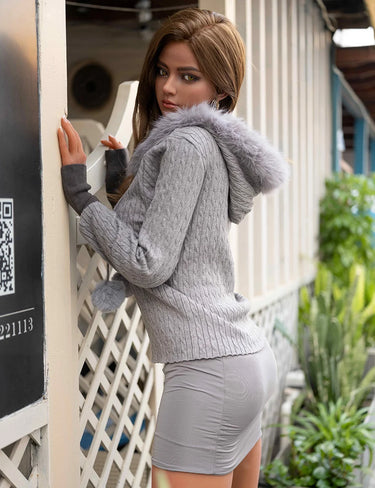
An S-TPE doll is a realistic doll made with an upgraded or specialized thermoplastic elastomer material commonly referred to as S-TPE. It is developed to provide a softer, more elastic, and more skin-like feel than many conventional TPE formulations.
S-TPE is often used in realistic doll bodies because it can reproduce soft tissue areas such as the breasts, abdomen, hips, thighs, buttocks, and limbs with a more compressible and flexible feel.
However, S-TPE is not one universal material formula. Different manufacturers may use different compositions, softness levels, densities, and production techniques under the S-TPE name. Customers should therefore evaluate each model based on its actual material specifications rather than assuming all S-TPE dolls feel exactly the same.
2. What Is the Difference Between S-TPE and Regular TPE?
Both S-TPE and standard TPE belong to the thermoplastic elastomer family, but S-TPE is generally positioned as an upgraded formulation designed to improve characteristics such as softness, elasticity, surface feel, shape recovery, or flexibility.
Traditional TPE is already known for being soft and flexible, but some S-TPE formulations are designed to feel more refined, more elastic, or closer to the softness of human tissue.
The exact difference depends on the manufacturer. Some S-TPE materials focus on improved softness, while others emphasize better resilience, lower oiliness, improved tactile feel, or more realistic body compression.
For this reason, buyers should compare softness, material density, body weight, elasticity, and manufacturer specifications when choosing between S-TPE and traditional TPE dolls.
3. Why Are S-TPE Dolls Popular Among Buyers Looking for Realism?
S-TPE dolls are popular because material softness plays an important role in perceived realism.
A realistic doll is not judged only by facial appearance. The way the body compresses, flexes, moves, and responds to touch can significantly affect the overall experience.
S-TPE is particularly suitable for creating softer areas such as the chest, stomach, hips, thighs, and buttocks. When combined with realistic body sculpting, articulated skeletons, detailed hands and feet, skin texture, and high-quality facial designs, S-TPE can contribute to a more natural-looking and natural-feeling body.
For buyers who prioritize tactile realism and softness, S-TPE is often one of the most attractive material options.
4. Are S-TPE Dolls Softer Than Silicone Dolls?
In most cases, S-TPE dolls are softer and more compressible than full silicone dolls.
Silicone generally provides stronger structural definition, sharper surface detail, and better resistance to certain types of wear. S-TPE, by comparison, is usually selected for flexibility, softness, elasticity, and a more yielding body feel.
This difference is especially noticeable in areas such as the breasts, abdomen, hips, thighs, and buttocks.
However, not every silicone doll is firm and not every S-TPE doll is extremely soft. Modern manufacturers offer different material grades, soft-body technologies, gel-filled structures, and internal foam systems, so the final feel depends on the complete construction of the doll.
5. Are S-TPE Dolls More Realistic Than Standard TPE Dolls?
They can be, particularly in terms of softness and tactile response.
Some S-TPE formulations are designed to provide improved elasticity, smoother compression, and better shape recovery compared with standard TPE. These properties may make the body feel more natural when touched or repositioned.
However, realism also depends on many other factors, including facial sculpting, skin texture, body proportions, skeleton design, breast structure, joint range, hand and foot details, makeup, hair, and overall manufacturing quality.
A high-quality traditional TPE doll may still be more realistic than a poorly made S-TPE doll. Material type should therefore be considered as one part of the overall product design.
6. How Durable Is an S-TPE Doll?
A high-quality S-TPE doll can offer good durability when it is handled and maintained correctly.
S-TPE is designed to be flexible, but very soft materials can still be vulnerable to tearing, overstretching, compression damage, or surface wear if they are handled incorrectly.
High-stress areas such as fingers, toes, underarms, groin areas, knees, elbows, and joint zones should be treated carefully. Users should avoid pulling the skin excessively, forcing joints beyond their intended range, dragging the doll across rough surfaces, or leaving heavy pressure on soft body areas for long periods.
Proper cleaning, drying, storage, joint handling, and surface care can significantly extend the usable life of an S-TPE doll.
7. How Should an S-TPE Doll Be Cleaned and Maintained?
S-TPE dolls should be cleaned gently with mild products suitable for TPE-based materials.
Avoid strong solvents, alcohol-based cleaners, aggressive detergents, and harsh chemicals because these may damage the material surface.
After cleaning, the doll should be dried thoroughly, especially around joints, fingers, toes, folds, and other areas where moisture may remain.
Depending on the manufacturer's instructions, some S-TPE surfaces may benefit from periodic maintenance to reduce tackiness and preserve the skin feel.
The doll should also be stored in a cool, dry environment away from direct sunlight, high temperatures, sharp objects, strongly colored fabrics, and prolonged pressure.
Always follow the care instructions supplied for the specific model because different S-TPE formulations may require slightly different maintenance.
8. Are S-TPE Dolls Heavy?
The weight of an S-TPE doll depends primarily on its height, body size, material density, internal skeleton, and construction rather than the material name alone.
Full-size realistic dolls can be relatively heavy because the body contains a large volume of elastomer material together with an internal metal skeleton.
Petite dolls, shorter models, slim body types, lightweight structures, and torso designs are generally easier to handle.
Buyers who plan to move, dress, photograph, store, or reposition their doll frequently should pay close attention to the listed product weight before purchasing.
Weight is one of the most important practical factors when comparing realistic S-TPE dolls.
9. What Skeleton Systems Are Used Inside S-TPE Dolls?
Most realistic S-TPE dolls use an articulated internal metal skeleton designed to support posing and body positioning.
Depending on the model, the skeleton may allow movement in the neck, shoulders, elbows, wrists, fingers, waist, hips, knees, ankles, and other joints.
Some advanced models may also include upgraded skeleton systems, shrugging shoulders, articulated fingers, improved waist movement, enhanced hip rotation, standing feet, or reinforced joints.
The skeleton has a major influence on how naturally the doll can be posed, so buyers interested in photography, display, clothing presentation, or frequent repositioning should compare skeleton specifications as carefully as material specifications.
10. Who Should Choose a Realistic S-TPE Doll?
A realistic S-TPE doll is particularly suitable for buyers who prioritize body softness, flexibility, tactile realism, and natural-feeling compression.
It can be a strong choice for customers who find traditional silicone bodies too firm or who want a softer alternative to standard TPE.
S-TPE dolls may also appeal to collectors, photographers, visual content creators, clothing and lingerie display users, artistic projects, and customers looking for realistic human-form models or companion dolls.
When choosing an S-TPE doll, buyers should consider body height, total weight, softness, facial design, skeleton system, breast structure, customization options, maintenance requirements, storage space, and budget rather than selecting based on material alone.